Payment Gateway Platform
Payment solutions that combine simplicity, security, and innovation.
Overview
Payment infrastructure built for the real world.
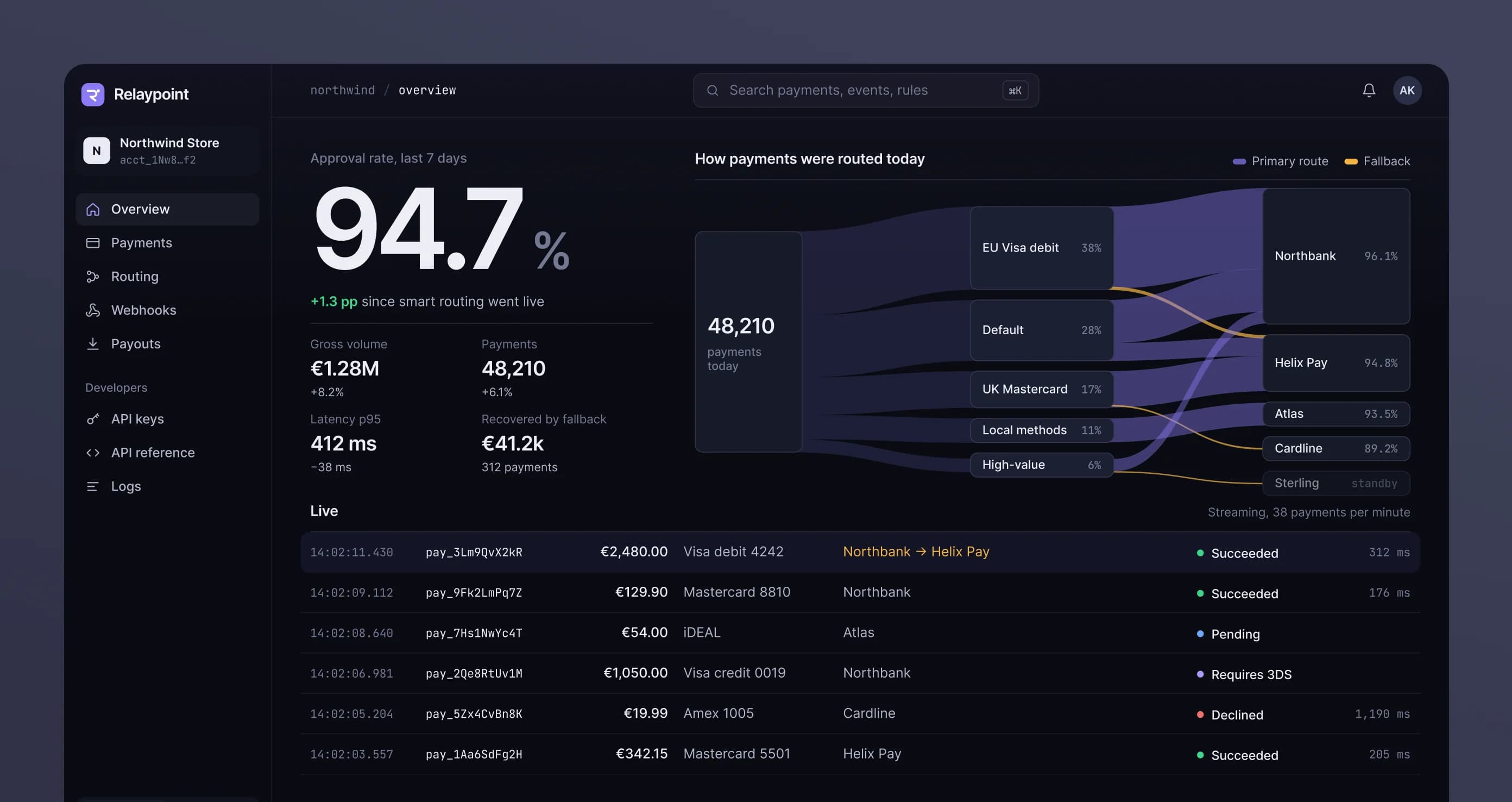
A payment gateway is more than a checkout integration. It is a system that must process transactions safely, handle failures gracefully, coordinate multiple payment providers, and give engineering and operations teams a clear view of what happens at every step.
The platform brings these capabilities together in one coherent architecture, with developer-friendly APIs at the edge and reliable transaction processing at its core.
01
API design, Developer experience
An API developers can rely on
Predictable contracts. Fewer surprises.
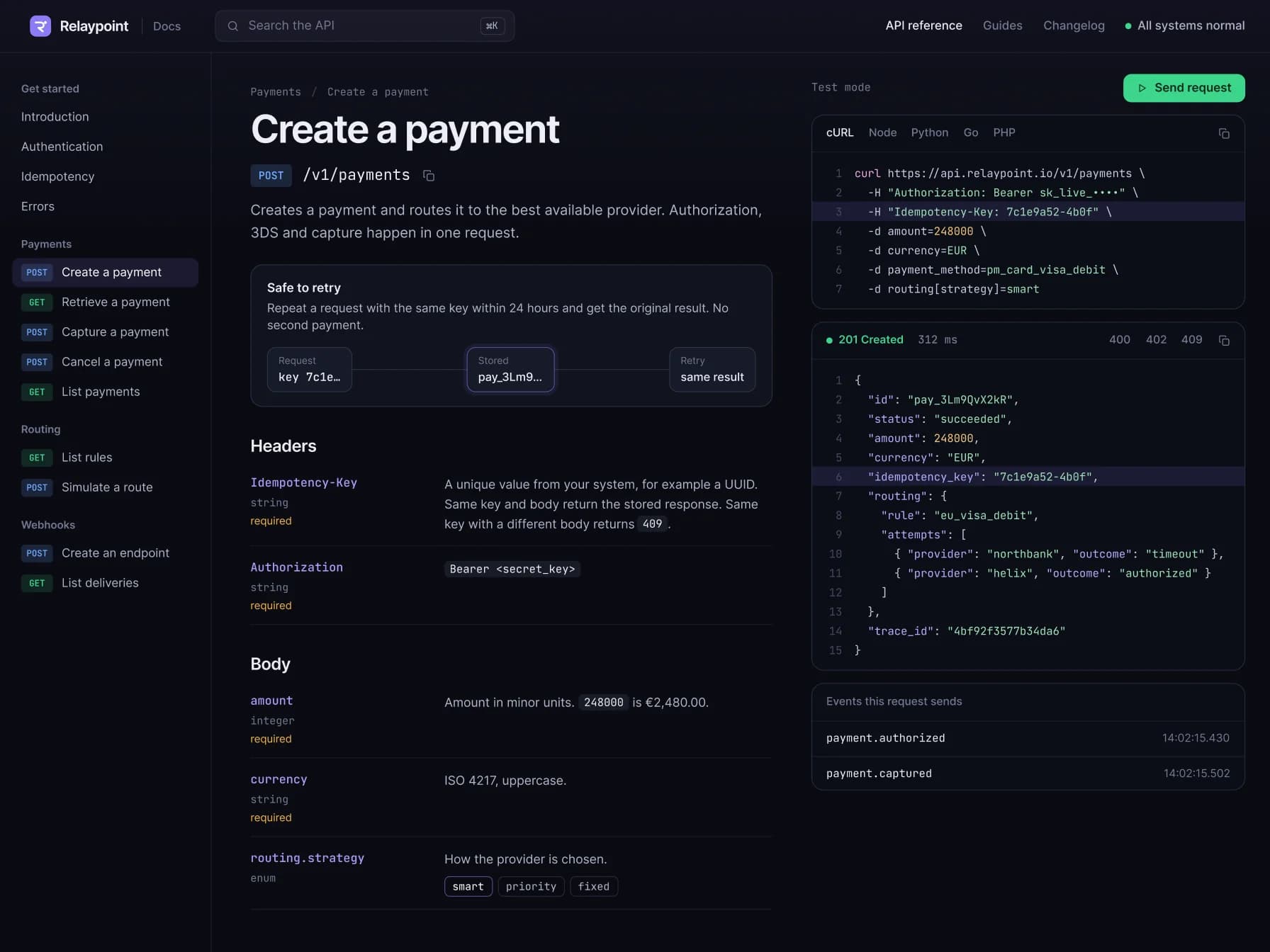
Well-designed payment APIs should be easy to integrate and safe to use in production. Clear resource models, consistent error responses, explicit versioning, and developer-friendly SDKs make integrations easier to build and maintain.
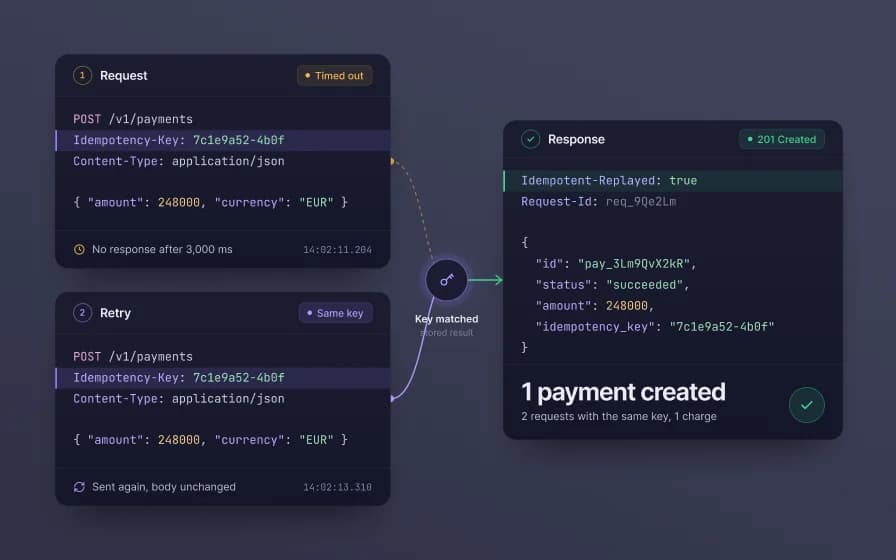
Idempotency keys and well-defined request semantics help merchants safely retry operations without accidentally creating duplicate payments.
02
Payment orchestration, Transaction safety
Every transaction needs a reliable path
The right route. The right outcome.
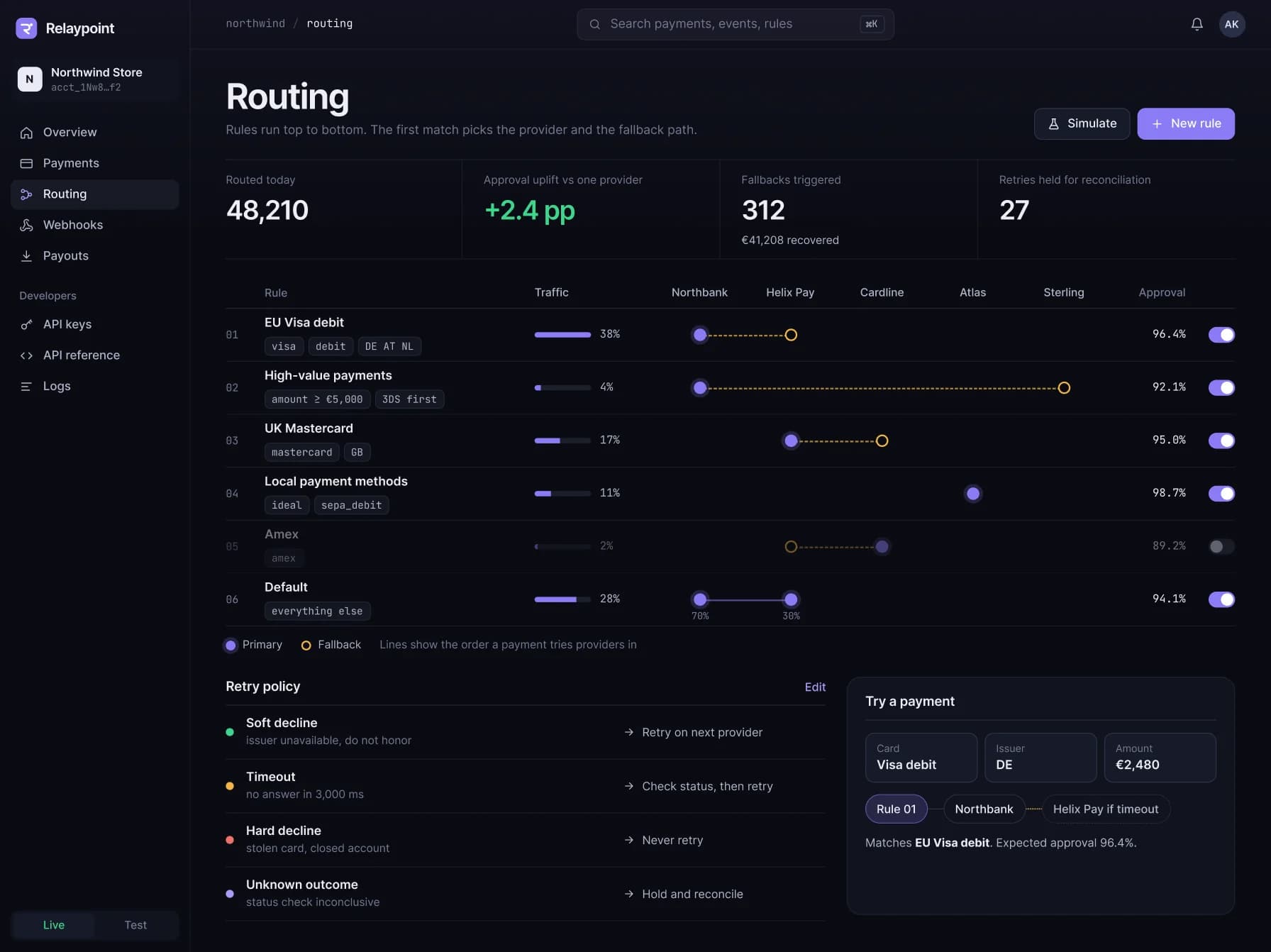
Payments move through a chain of systems, each with its own constraints and failure modes. An orchestration layer routes transactions across acquiring providers, applies configurable routing rules, and supports controlled retries and fallback paths.
The objective is to improve approval performance while preserving transaction integrity, avoiding duplicate charges and ensuring that uncertain outcomes are handled deliberately, not blindly retried.
03
Reliability, Event-driven processing
Built to handle failure
Resilience is part of the architecture.
Payment systems must account for timeouts, provider outages, delayed responses, and events that arrive more than once, or out of order.
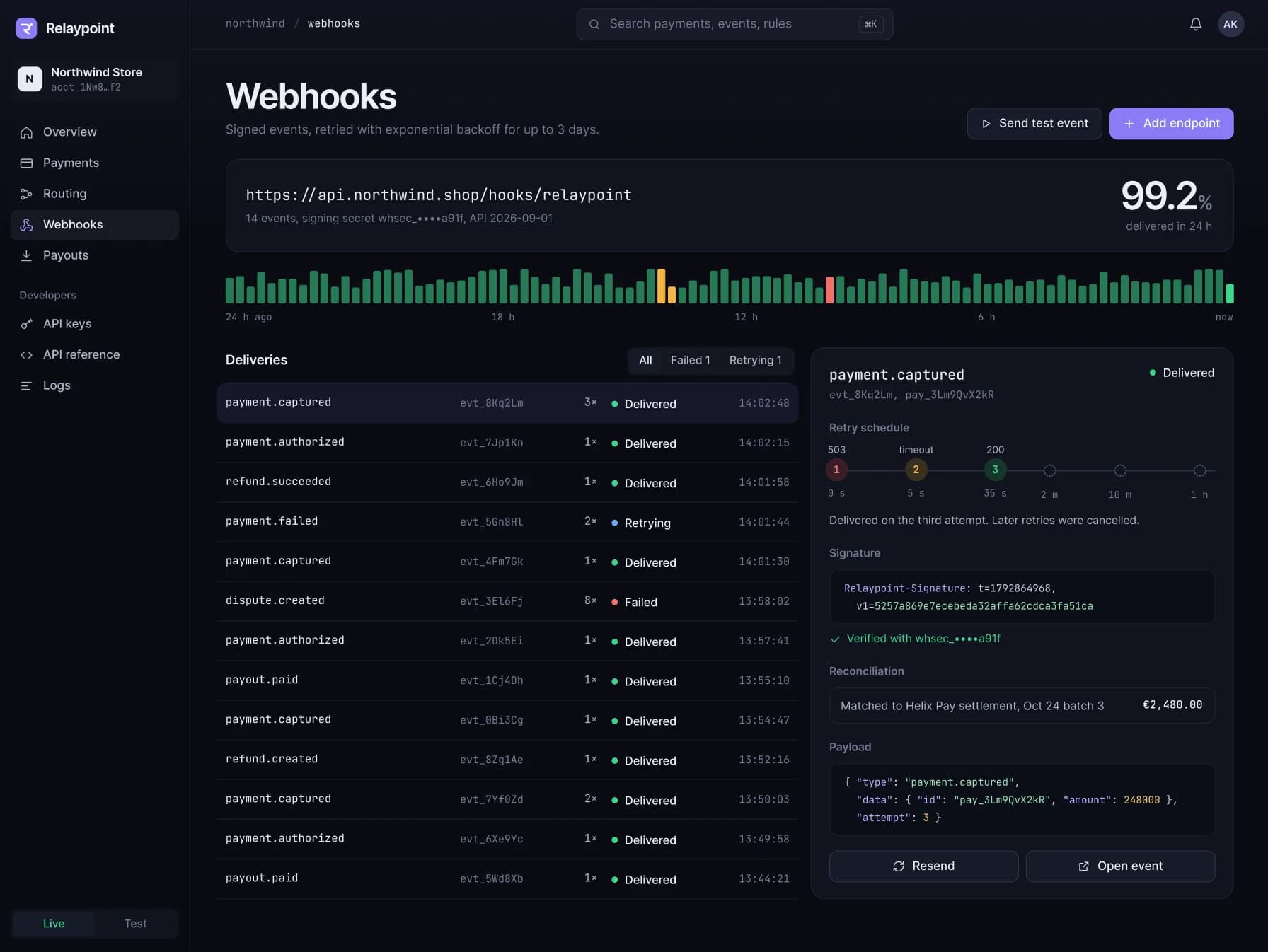
The platform combines fault-tolerant processing with signed webhooks, controlled delivery retries, and reconciliation workflows. Availability targets, latency budgets, disaster recovery, and recovery procedures are treated as engineering requirements from the start.
04
Observability, Security and compliance
Know what happened. And why.
Every payment should be explainable.
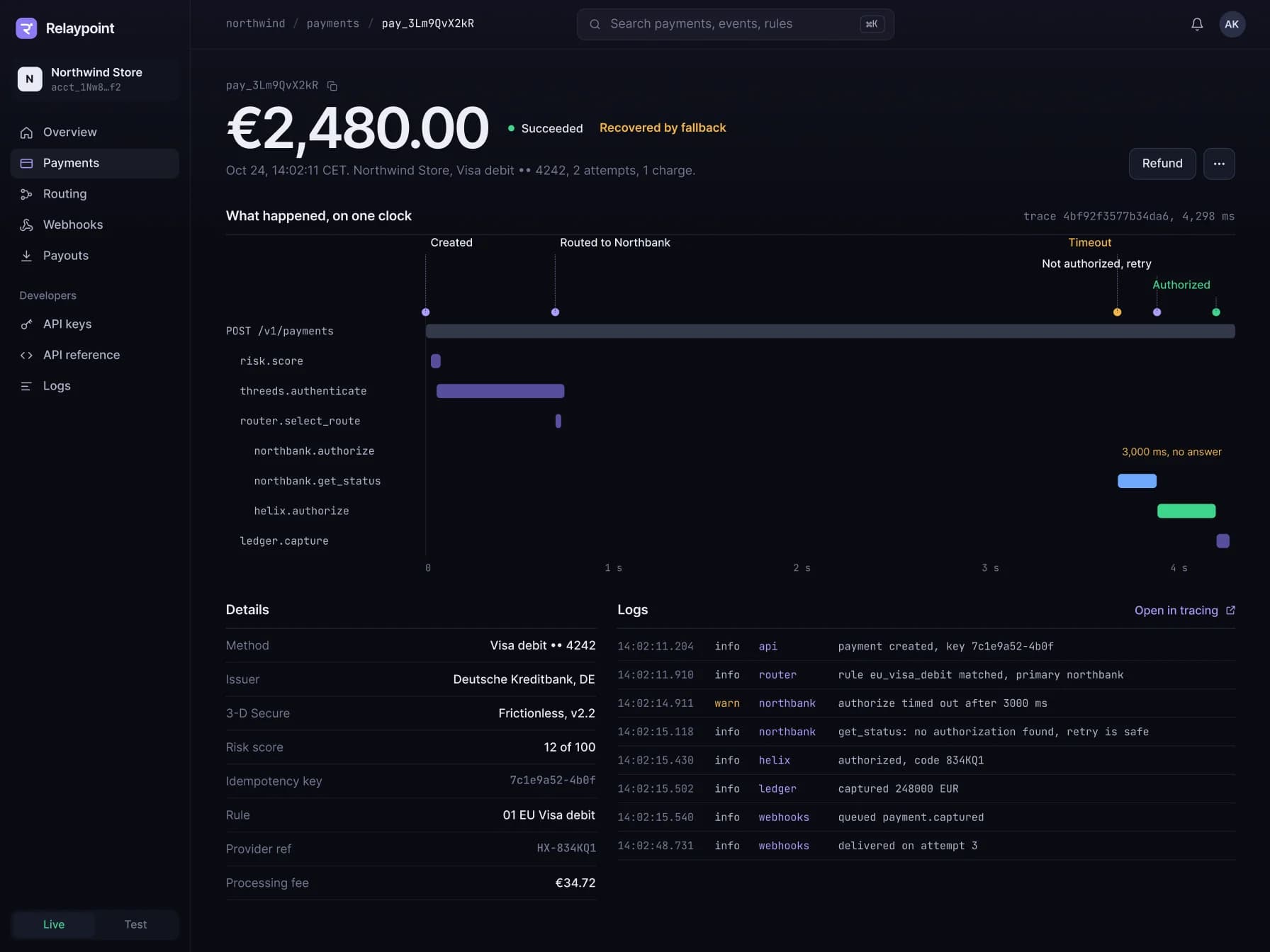
When a transaction fails, teams need more than a status label. Correlated logs, metrics, distributed traces, and an auditable transaction timeline help engineers identify where an issue occurred and help operations teams understand its impact.
Security is built into the flow through appropriate PCI DSS controls, tokenization, 3DS2 integration, and fraud-prevention capabilities, with clear boundaries between payment data, services, and operational access.
A payment gateway is only as strong as the system behind it.
From API contracts to transaction orchestration, every layer contributes to a payment experience that merchants can trust and engineering teams can operate with confidence.